

CCG Participates in E-Launch of Flagship Southeast Asia Survey
CCG | April 07 , 2026The ASEAN Studies Centre at Singapore’s ISEAS – Yusof Ishak Institute held the online launch and discussion ofThe State of Southeast Asia: 2026 Survey Report on the morning of Tuesday, 7 April 2026.
▲ Video | E-Launch and Discussion of The State of Southeast Asia: 2026 Survey Report
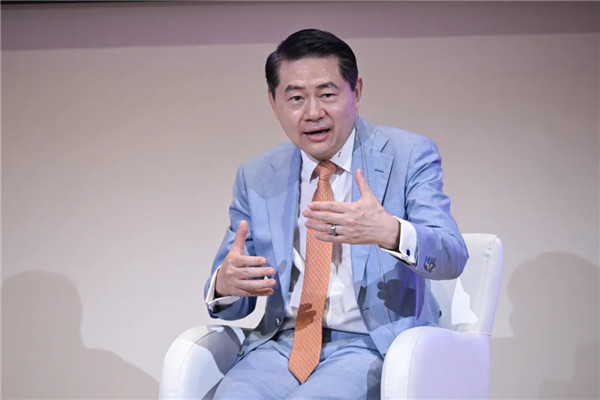
Dr Wang Huiyao, Founder and President of the Center for China and Globalization (CCG), and Mr Zichen Wang, CCG’s Deputy Secretary-General, joined the discussion as invited discussants alongside Ambassador Scot Marciel, Dr Saya Kiba and Professor Herman Kraft.
The event was opened by Mr Ng Chee Khern, Director and CEO of ISEAS – Yusof Ishak Institute, while Ms Joanne Lin, Senior Fellow and Coordinator of the ASEAN Studies Centre, presented the survey’s key findings.
Now in its eighth edition,The State of Southeast Asia Survey remains one of the region’s most closely watched annual perception studies on geopolitical developments, ASEAN, and the role of major powers in Southeast Asia. The 2026 survey was conducted from 5 January to 20 February 2026 and drew 2,008 responses from Southeast Asian opinion-makers and thought leaders. Responses from Timor-Leste were included in the regional aggregated averages for the first time this year.
This year’s findings pointed to a region seeking balance amid intensifying major-power rivalry. When asked which side ASEAN should choose if forced to align with one of the two strategic rivals, 52.0 percent selected China and 48.0 percent the United States. U.S. leadership under President Trump ranked as the top geopolitical concern at 51.9 percent. At the same time, 55.6 percent of respondents said their country’s relations with China would improve or improve significantly over the next three years.
In perceptions of influence, 55.9 percent of respondents viewed China as the most influential economic power in Southeast Asia, compared with 15.3 percent for the United States. On political and strategic influence, 40.0 percent identified China as the most influential actor in the region, followed by 29.9 percent for the United States.
On trust, Japan remained the most trusted major power in Southeast Asia, with 65.6 percent of respondents expressing confidence in it, while the European Union ranked second at 55.9 percent. Trust in China rose to 39.8 percent, marking the first time since the survey began in 2019 that more than a third of ASEAN respondents said they trusted China to “do the right thing” in contributing to global peace, security, prosperity and governance.
The two-hour online launch, attended by over 200 scholars, diplomats, journalists and other members of the general public, underscored the survey’s continued relevance in regional policy and media circles.
Recommended Articles
-
Text of "Aristotle-Confucius Dialogue" @ Athens Democracy Forum
-
Putin, Answering Henry Huiyao Wang, Says Xi-Trump-Putin Meeting at APEC Is Possible
-
Transcript: CCG book launch explores China’s role in the next global order
-
CCG President Wang Huiyao joins 52nd Ambrosetti Forum in Italy
-
Recent CCG visits in Europe and Brazil